Edward Hoff – User Experience Researcher and Designer, located in Ohio.
I gather insights from research and make actionable technology solutions.
I have over 20 years of design experience spanning working in agile and sprint methodologies. My design philosophy is to begin with a focus on your end user. I believe good design begins with understanding your users. I use available research to set the baseline for who I am designing for, then to seek to perform research where I can to draw the complete picture of my user. I want to ensure my designs allow the user to complete and achieve their goals as fast as possible and fit within their expectations. This is achieved through iterative design and development. I work with my business partners and stakeholders to understand the user and to have them share in the design process. Their knowledge and experience helps to establish an understanding of the desired outcomes, and to build the empathy-bond with the user from the beginning. I have used design thinking techniques to understand business direction and goals as well as to help user’s define their requirements and job process.
Email me at ehoff62@yahoo.com to request a copy of my resume.
Project #1
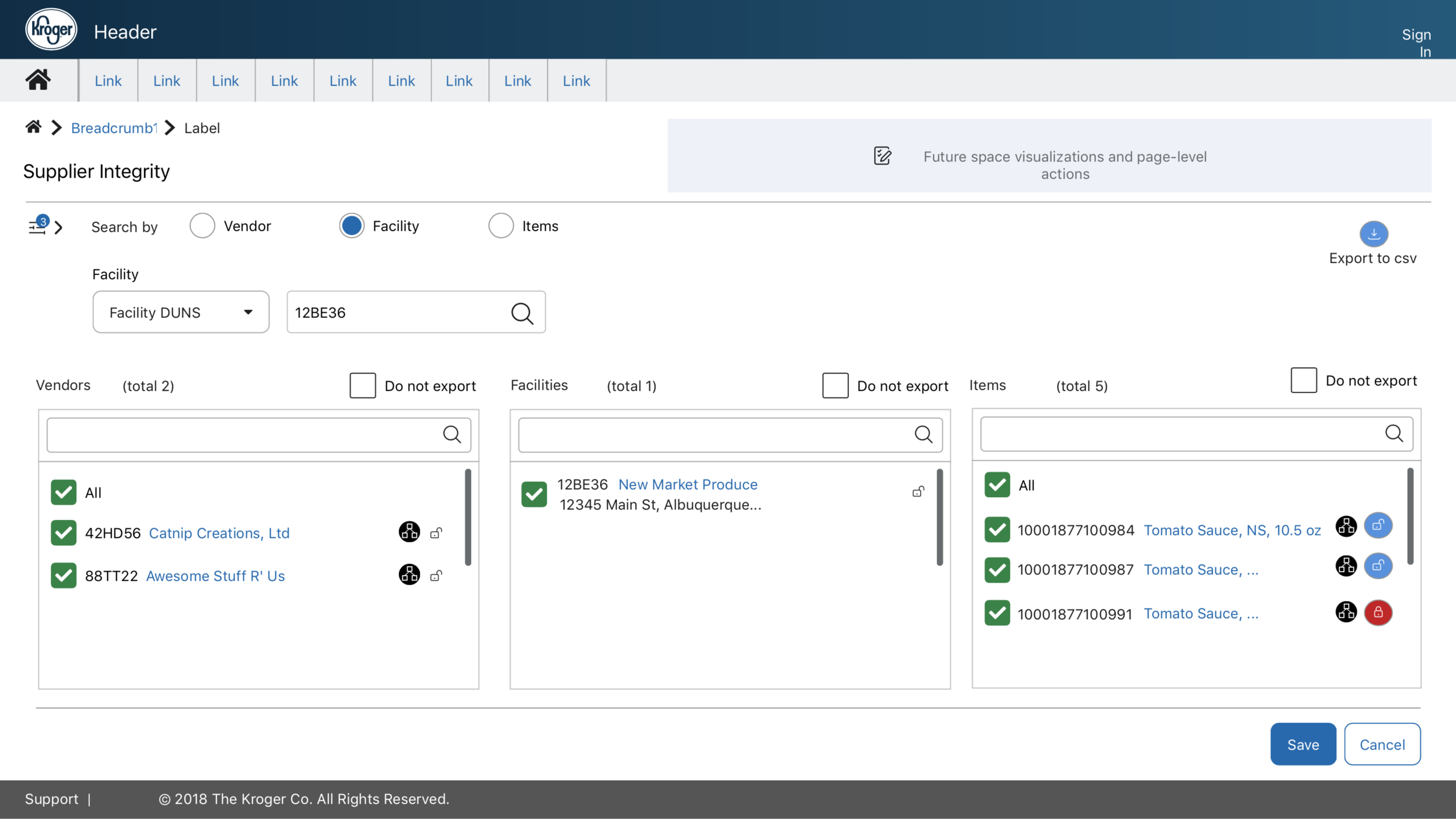
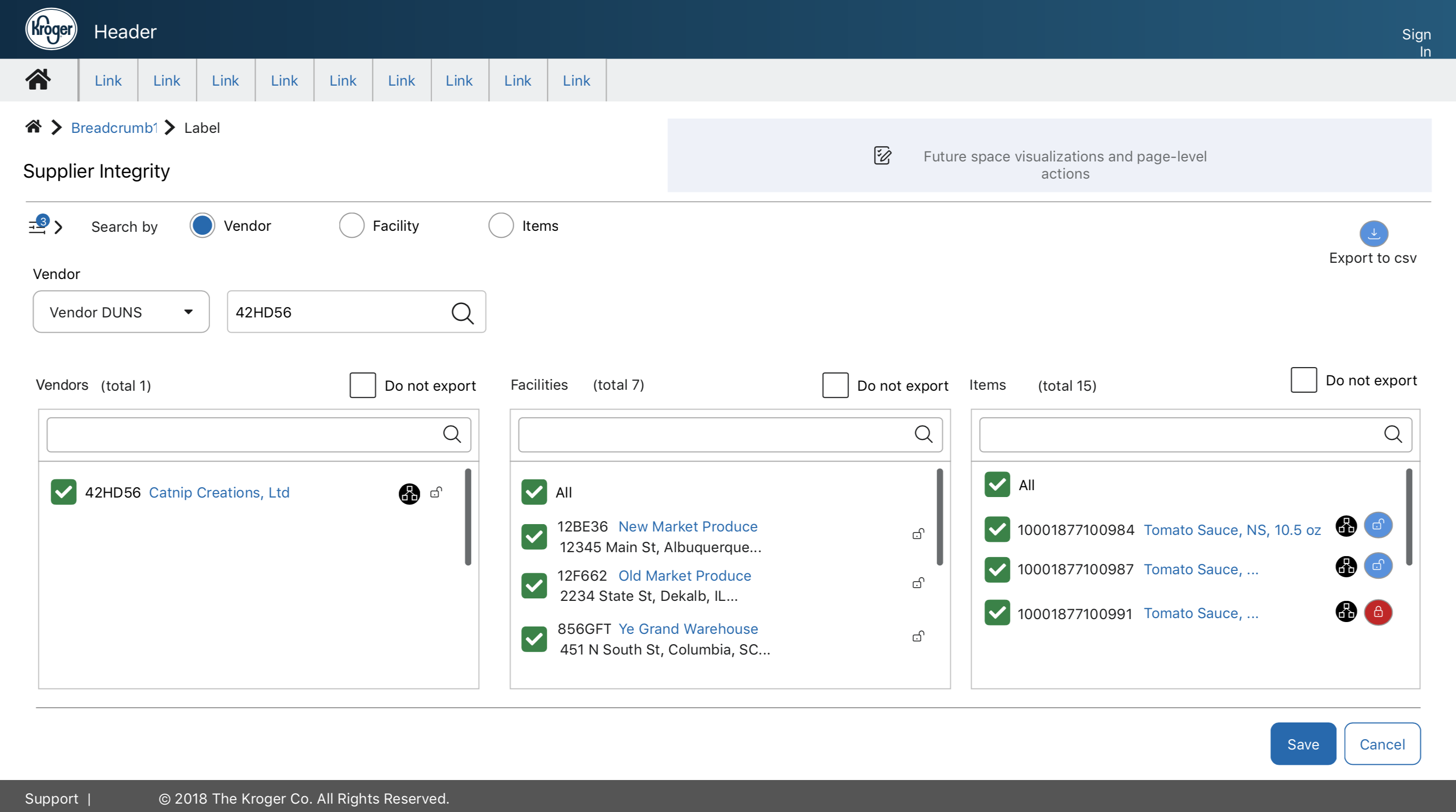
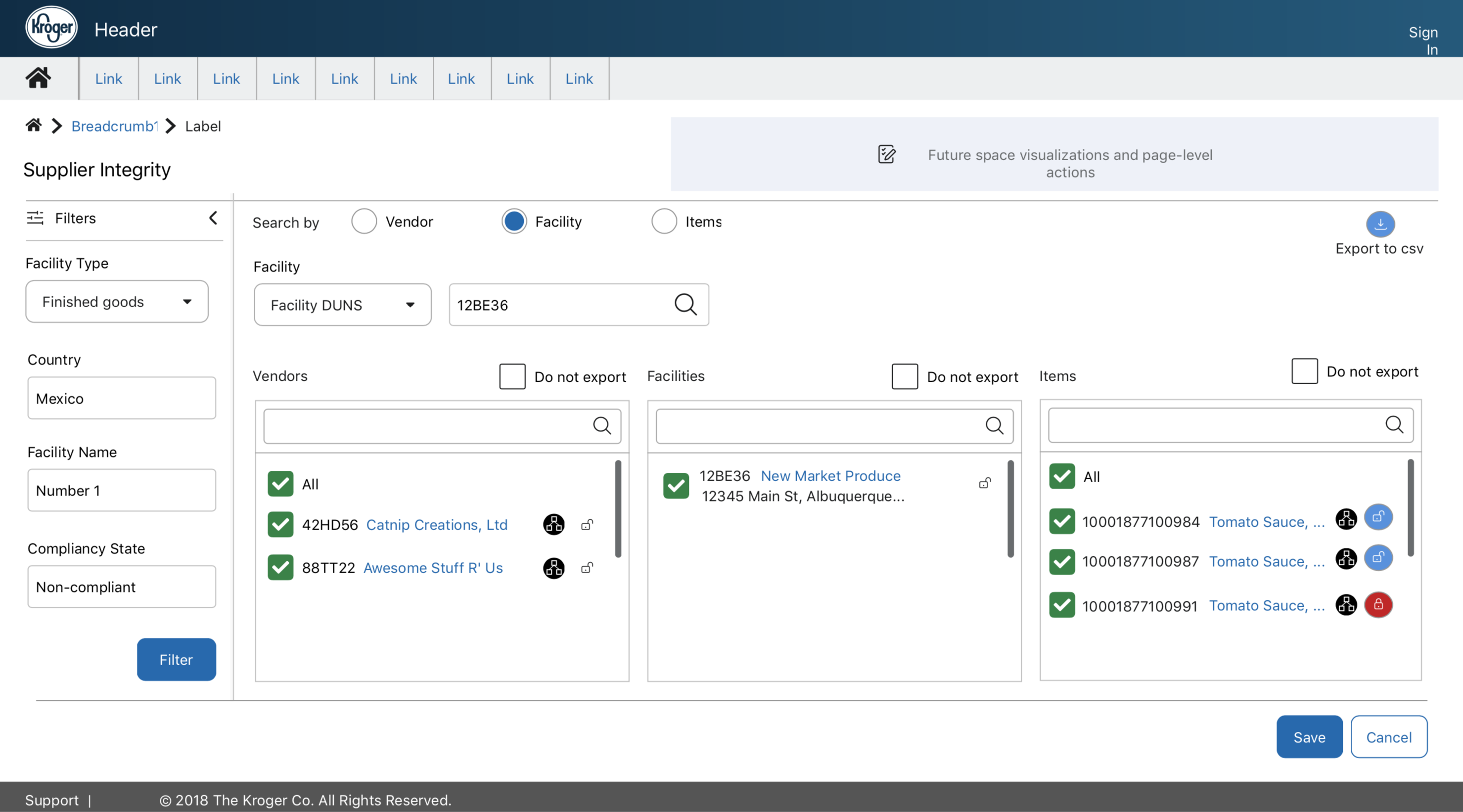
Problem: The development responsible for supplier compliance wanted to build an interface to allow blocking of products from facilities that failed compliance checks or were discovered to be part of a recall. They currently operated with the use of three spreadsheets. The original request was to make the spreadsheets available on a web page and to build in links that would display relationships between the data from one spreadsheet to another.
Approach: I started by recommending doing a small design thinking exercise to gauge how the end users wanted to interact with the data, how they processed the information from three spreadsheets into actions, and how they envisioned the optimal process. Once I gathered that level of information, I put together a plan to display the required data from the spreadsheets onto a single screen via interactive segments on the screen. I wireframed the solution in Sketch and presented the initial concept to the business stakeholder. At first, our business stakeholder was hesitant to try such a radical departure from what he envisioned, but when he got feedback from his users about their commitment to the process and their belief in how well this would work, he agreed to the design.
Result: I handed off the wireframes and design concepts to a visual designer and he took the project to completion. The new application screens were a success for the supplier compliance team. The design allowed for time-savings in finding non-compliant items and the layout was seen as an innovative approach to conquer a complicated problem.
Project #2
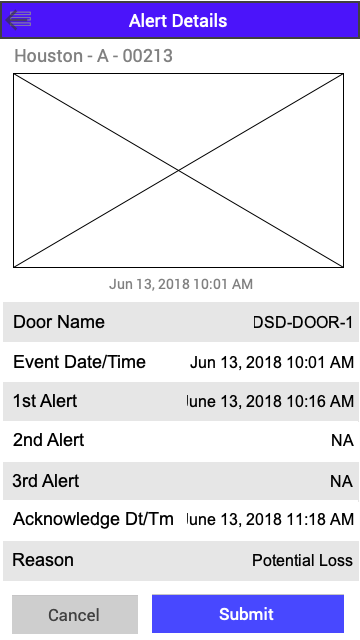
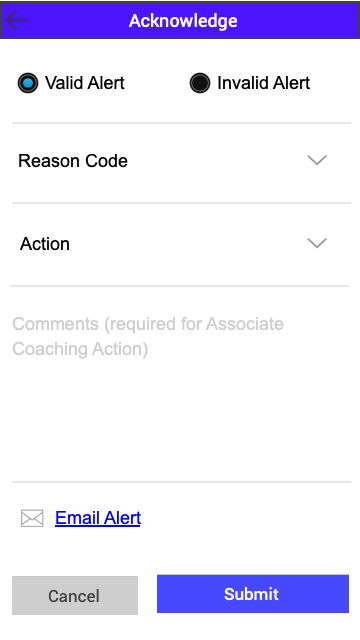
Problem: The Loss Prevention group wanted an application that would provide alerts to our store management whenever door in the back room of the store was opened outside of scheduled time. The desire was to provide visibility to our store leadership as to the activities within the back room. There was a need to be able to allow the store managers to act against the alerts, and to escalate the alerts to higher levels of management should the store manager not respond in a timely fashion.
Approach: A mobile app was designed to provide the alerts to the store managers as well as to provide the means to interact with the individual alerts. I met with the loss prevention team to understand what was envisioned from a business perspective. We mapped out the process and and determined the steps needed. I then worked with store management to understand how they would need to interact with an application and how it would fit into the overall activities they must perform in the day-to-day operations of the store. I wireframed out the solutions. These wireframes were taken to the loss prevention group and store managers for approval.
Result: The wireframes were handed off to a visual designer who worked with the development team to implement the application. The application is still in development. Different technology issues with how to move and save video content on our infrastructure have led to delays.


 Edward Hoff