Edward Hoff – User Experience Researcher and Designer, located in Ohio.
I gather insights from research and make actionable technology solutions.
I have over 20 years of research experience spanning both the generative approaches and the traditional usability techniques. My research philosophy is to begin with a focus on the end user. I want to tell the user’s stories and share their experiences to inform the design process. I believe in including my business partners and stakeholders in the early research process. Their knowledge and experience helps to establish an understanding of the desired outcomes, and to build the empathy-bond with the user from the beginning. I have used design thinking techniques to understand business direction and goals as well as to help user’s define their requirements and job process.
Email me at ehoff62@yahoo.com to request a copy of my resume.
Project #1 – Interview
Problem: The business wanted to understand how a legacy location service was operating and how it interacted and impacted with other operational systems. There was also a desire to understand the primary use cases of the location services application.
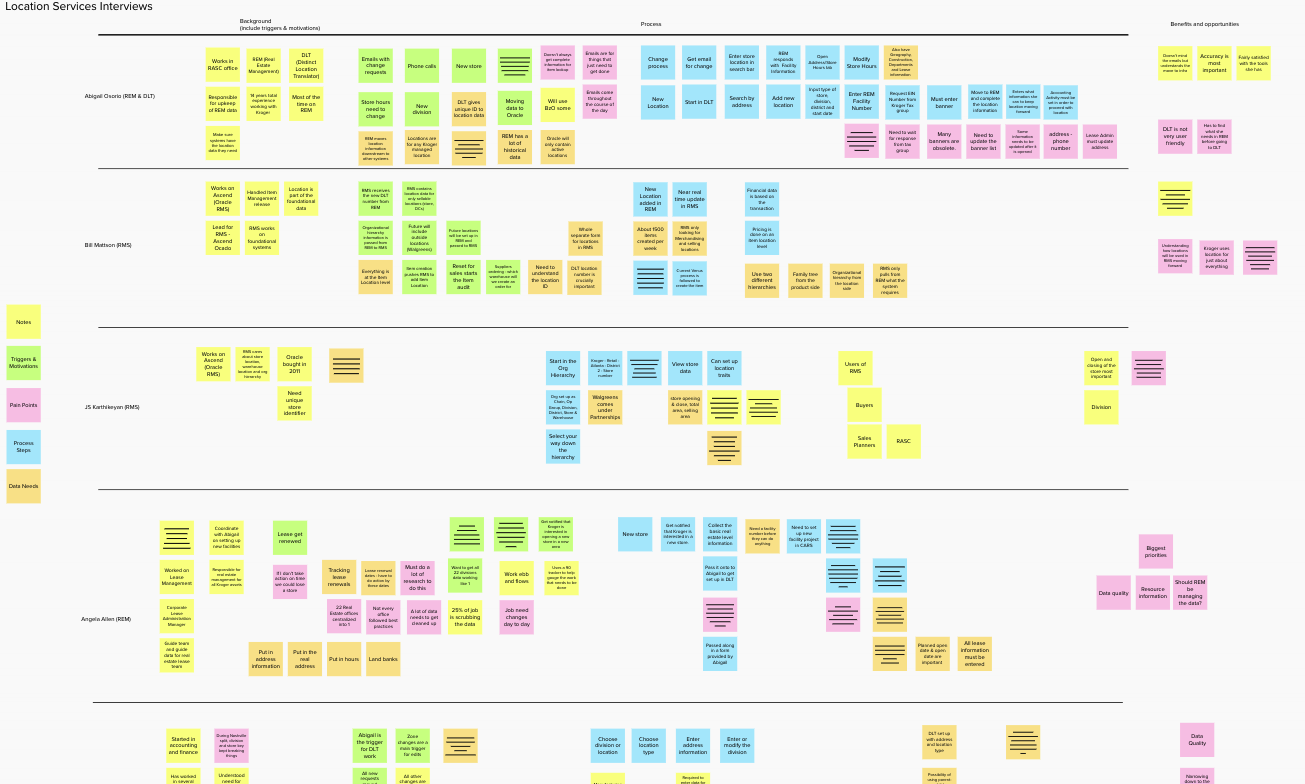
Approach: I recommended we conduct interviews to understand the perspective of the users of the application. This allowed us to look at the use cases as the main tasks performed by the users. This would help to uncover the primary and ancillary applications that were consuming the data. In the end, my goal was to get a mapping of the “data journey” to highlight how information was passing through the application. Each interview was mapped to a mural board across the dimensions of: triggers, process, benefits and pain points.
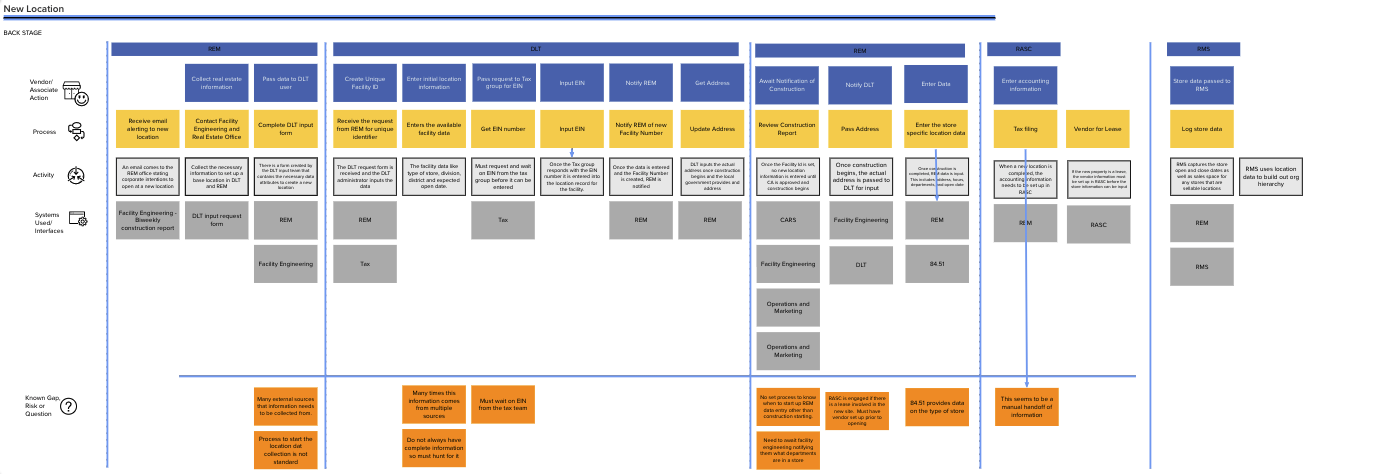
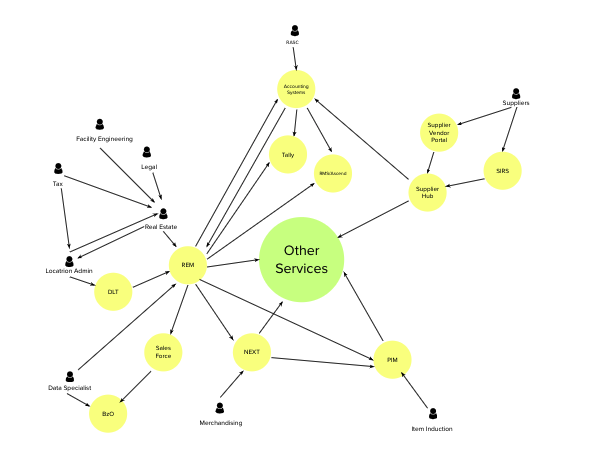
Result: The results from the interview exposed three primary use cases: new location, edit store/lease information, and data integrity. It was also discovered that the connections to the location services were far larger than originally anticipated. I documented the process flows into a mural board as a “journey” and further built a system context diagram to highlight the various connections and directions the data was flowing.
Project #2 – Shadowing
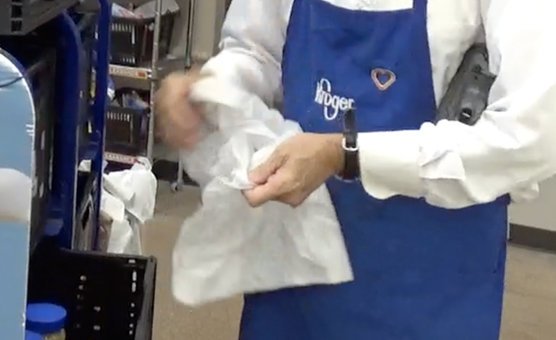
Problem: A new application to pick grocery orders was being launched from the pilot store into full retail stores. This application was a replacement for a legacy system that was being used to pick grocery orders. There was concern over how well the application would perform since the pilot store was a controlled environment that did not have customers. The full launch would be in locations where the associates would be interacting with customers and trying to complete online order picking in the same space the customers were shopping for groceries. The business had a requirement to lower the per-item pick time with the new application. We achieved the desired pick times in the pilot store and wanted to see how well the application would perform in a production store.
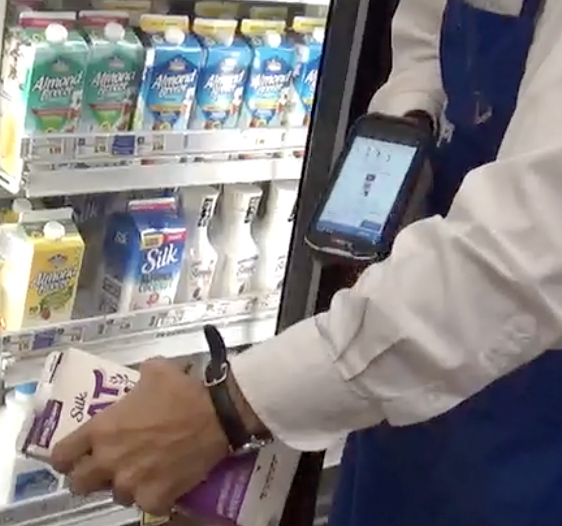
Approach: A shadowing techniques was recommended to gather the associate data. Associates were recorded while picking orders and were asked for clarification along the way whenever events occurred that would hinder the operation. Associates were encouraged to speak aloud and discuss things they both liked and disliked about the application and to provide overall feedback on how well it functioned.
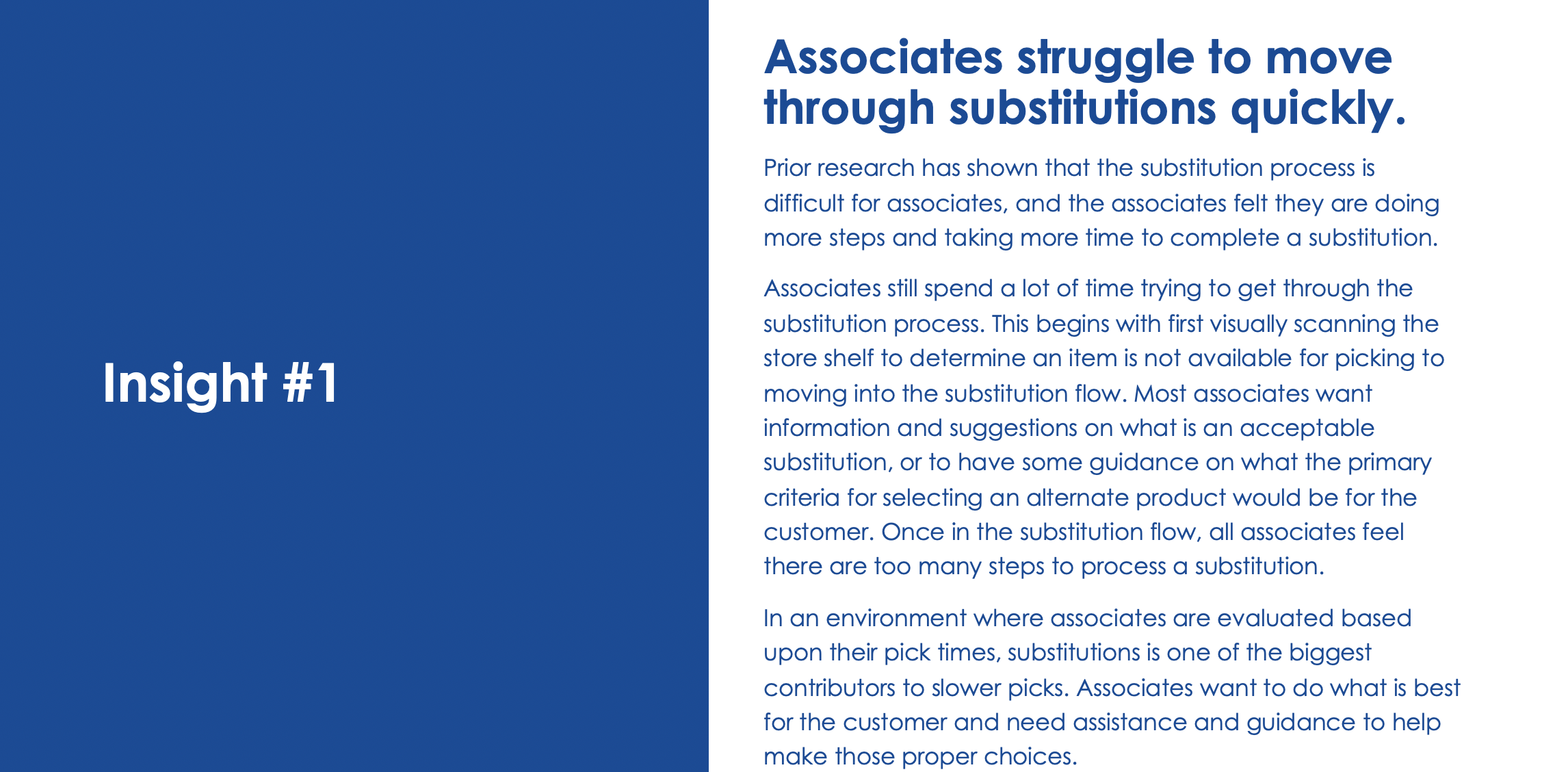
Result: The overall findings showed that the application did indeed provide for faster picking times. However, external factors within the store operations kept the times from meeting the desired goal. These insights were captured and presented to both the development team and the operations team. Recommendations were made to adjust both the application and the operations to allow the pick times decrease to more of the desired level.



Project #3 – Design Thinking
Problem: Our Health & Wellness leadership team was having some challenges prioritizing all of the work they wished to perform over a three year period. They were composed of a 10-12 teams that were building out there own timelines and priorities. These competing priorities tended to place demand and conflicting requirements on some of the supporting services. The leadership was looking for a way to get all of the teams to schedule their work so that there was not so much impact to the support services.
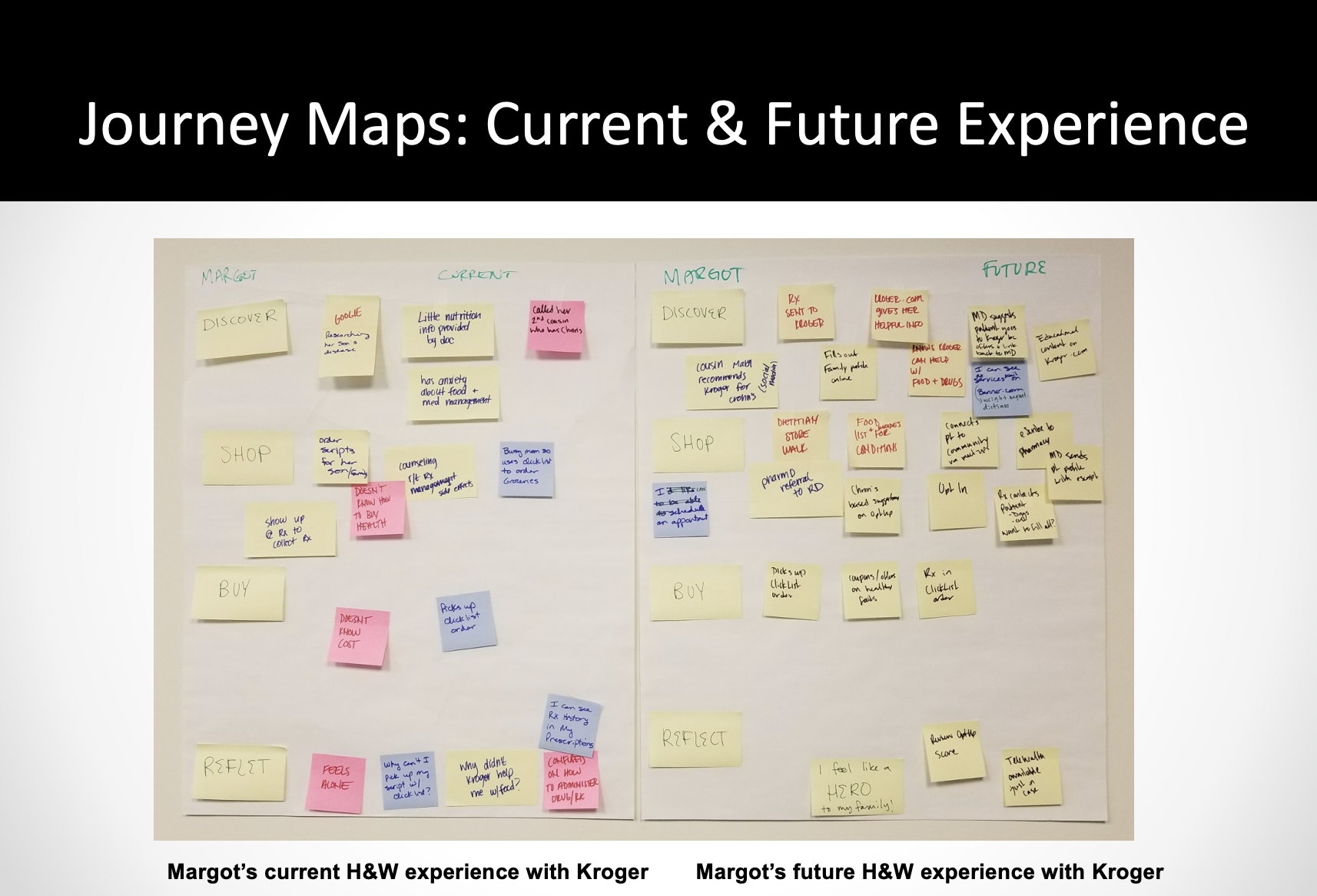
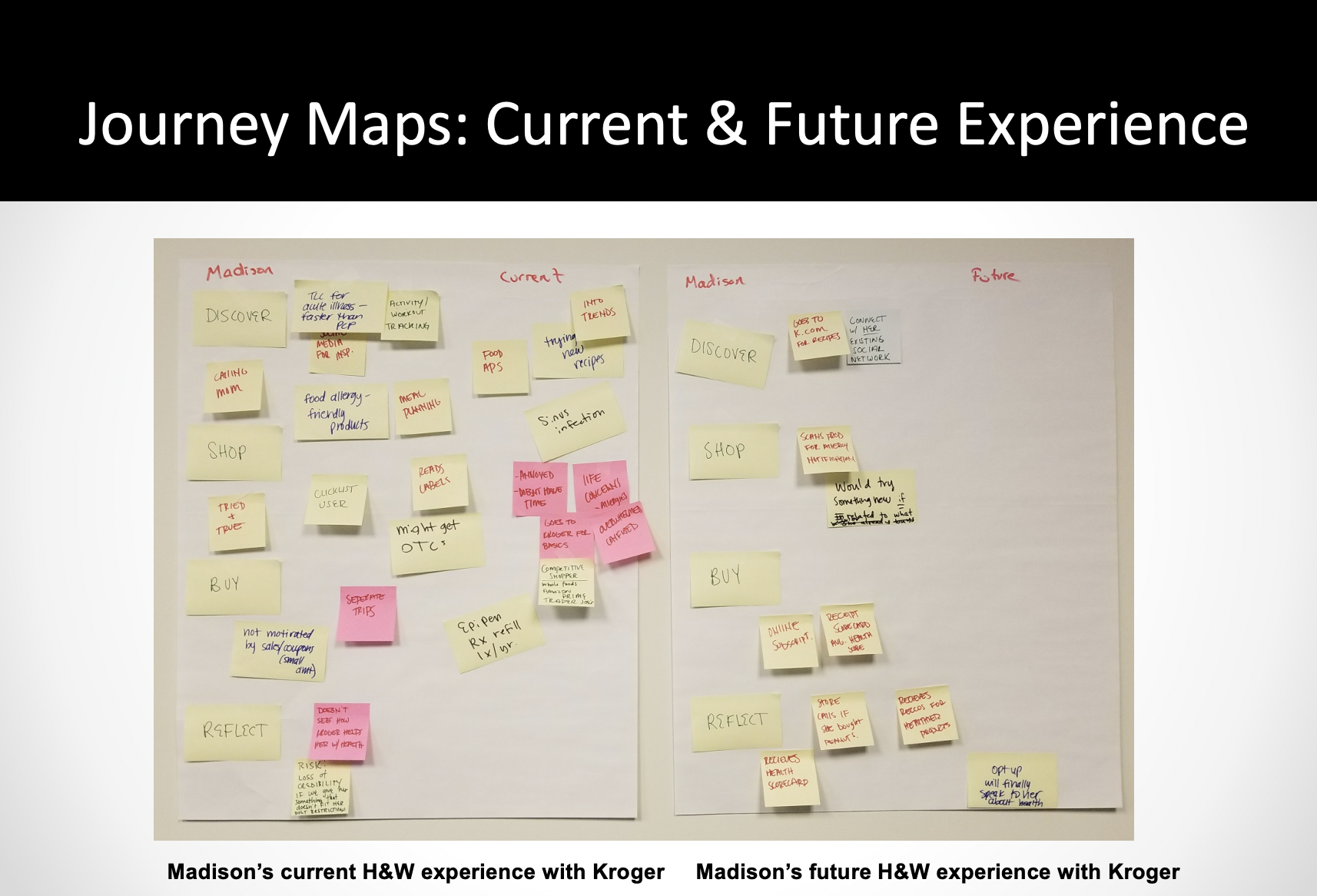
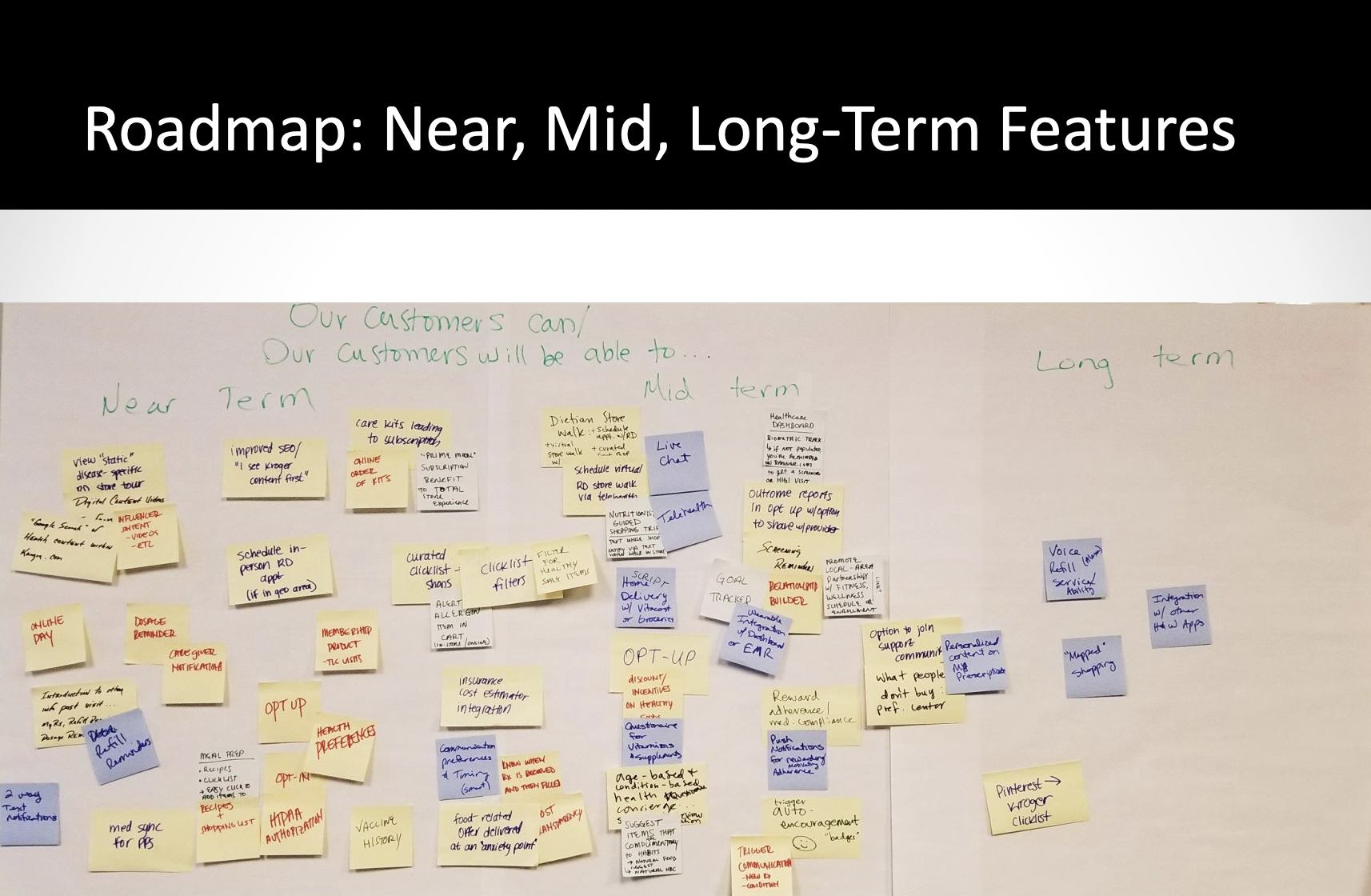
Approach: Design Thinking was recommended to allow the teams to talk to each other in a safe, collaborative environment. Everyone would bring their stories and use cases they were working toward. We mapped out the goals and business needs for each of the groups and used affinity mapping to find the commonalities between the groups.
Result: By looking at the work that the other teams were doing, each team was able to see and understand how they could fit their work into an overall process. Each task/project was prioritized against all other work and set into a three year plan in terms of immediate/intermediate/long-term objectives. The leadership was able to take the results of the design thinking session and establish the budget, timelines and expectations for the three year plan.

 Edward Hoff